Willkommen auf der Seite der "Textinitiative Fukushima"
Die Seiten der Textinitiative Fukushima werden derzeit von der Japanologie der Goethe-Universität betrieben. Gegenwärtiges Anliegen von TIF ist die zeitgeschichtliche Dokumentation. Das Forum dient nun in erster Linie als Archiv für Informationen zu 3/11 sowie allgemein zur Geschichte des Atomaren. Die Suchfunktion ermöglicht Recherchen zu Stichworten, Inhalten und Akteuren.
| Vortrag "Toxic Food and Slow Violence in Japan’s Post-3/11 Literature" (16. Februar) | 16.02.2022 |
Kristina Iwata-Weickgenannt, Nagoya University February 16 (Wed), 2022, 18:30h JST Abstract: "In this presentation we examine representations of food and feeding in post-Fukushima literature. Following the hydrogen explosions at the Fukushima Daiichi nuclear power plant, radioactive plumes swept across the country. As a result, Japan saw a sharp increase in radioactivity levels in a range of foodstuffs. Yet the government-sponsored Eat and Support campaign, designed to encourage the consumption of produce from northeastern Japan, failed to address contamination issues, giving the impression that economic recovery was prioritized over food safety aspects. In the ensuing decade, writing about food consumption, production, and feeding became one of the prime ways for authors to express political dissent. To illustrate this, we read four texts published between 2012 and 2014 by Satō Yūya, Yoshimura Man’ichi, Kimura Yūsuke and Tawada Yōko through the theoretical lens of the Capitalocene. In this concept, capitalism is seen not merely as a mode of production, but as “a way of organizing the relations between humans and the rest of nature—that is as a system of nature, capital, and power” (Velednitsky 2017). Zooming in on representations of food and feeding, we show how the four authors expose, and explore, different aspects of the Capitalocene: they criticize authoritarian tendencies in the post-nuclear age, question conventional—highly gendered, highly exploitative—practices of food consumption as well as production, and challenge the idea of perpetual progress, be it economic, technological or in terms of human bodies. We argue that by depicting acts of sabotage, or by imagining lives that escape the extractivist logic of our time altogether, Satō, Yoshimura, Kimura, and Tawada bring to life characters who refuse to provide cheap work, energy and lives to the capital in the dual sense, to Tokyo and to capitalist accumulation." Link: https://www.dijtokyo.org/event/toxic-food-and-slow-violence-in-japans-post-3-11-literature/ |
|
| Post-Fukushima-Photographie: Dominic Nahr | 14.02.2022 |
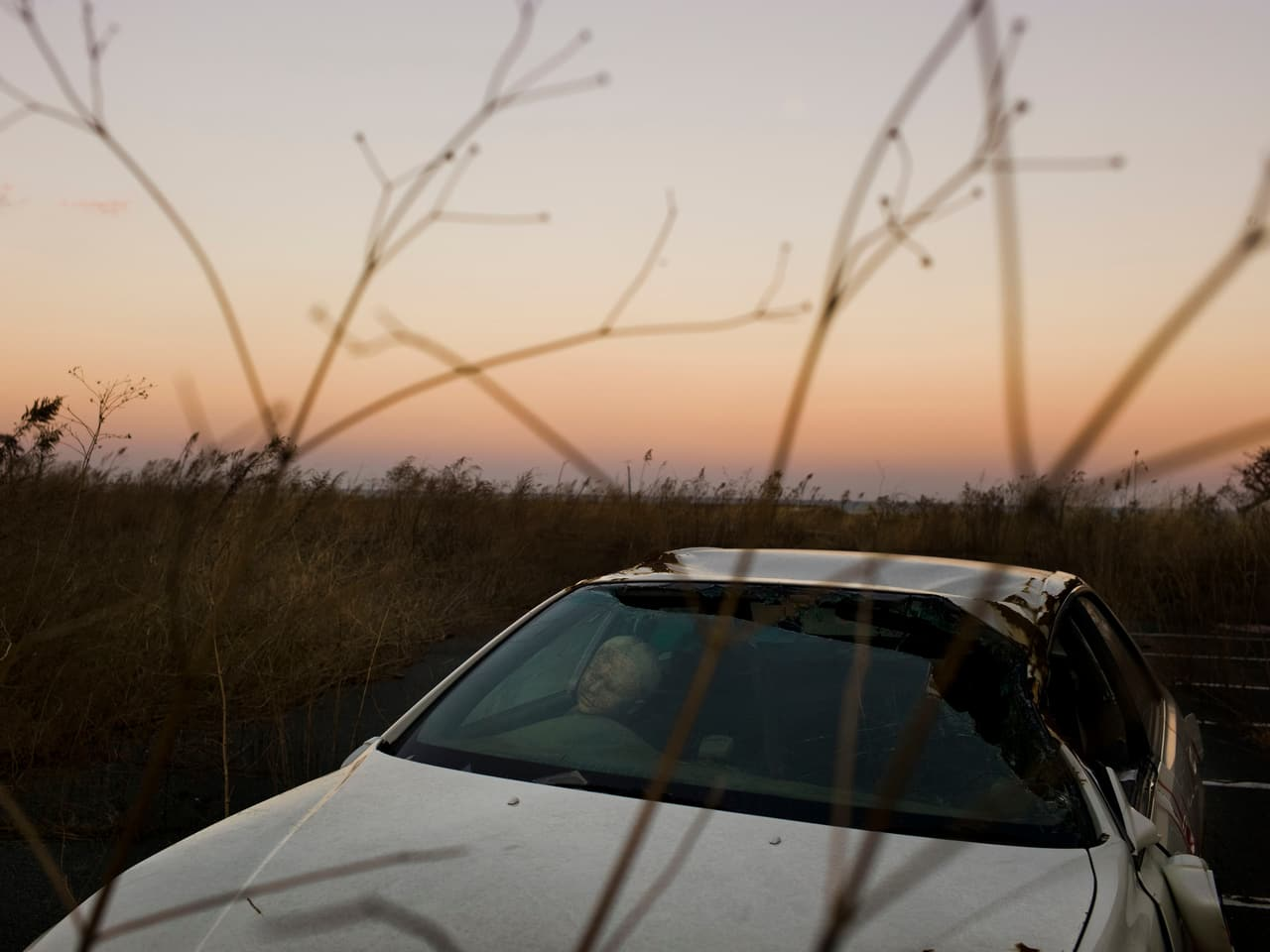
"Nur einen Tag nach der Katastrophe in Fukushima 2011 war Dominic Nahr vor Ort. Der Fotoreporter war nicht nur einer der ersten, der die Katastrophe festhielt. Er dokumentierte das Ausmass und die Folgen so umfangreich wie kein zweiter – und das über Jahre hinweg. Leere, Überschwemmungen, Verwüstung: Es sind Bilder, die sich ins Gedächtnis einbrennen." (Srf 2021)
|
|
| Ein Rückblick: Kommentar zur Debatte um olympische Spiele in Fukushima | 11.02.2022 |
Jens Ljunggren (Universität Stockholm) rezensiert am 27. Juli 2021 zwei Bände zur anti-olympischen Bewegungen anlässlich der Olympischen Sommerspiele 2021, wobei er sich kritisch zur Perspektive der Beiträge als "aktivistische Wissenschaft" äußert: "After reading these books, however, I had to think about what it means for activists to research their own movement and write its history. There are several historical examples of political commitment and activism breaking ground for both innovative and important research, and the Olympic critical research is just one example. Nevertheless, certain risks and shortcomings with activist research come to the surface." "Basically, the accident at the Fukushima Daichi nuclear power plant in 2011 and the hosting of the 2020 Olympic Games in Tokyo are directly related.’ These are the opening lines in Ukai Satoshi’s, professor of French and Postcolonial Studies at Hitubashi University in Tokyo, contribution to NOlympics Tokyo 2021. What we get here is highly confrontational language and research that is totally supportive of the anti-Olympic movement." Während er eine positive Gewichtung anti-olympischer Argumente in einer wissenschaftlichen Darstellung zum Kontext Fukushima und Olympische Spiele problematisiert, erkennt er die Untersuchungen doch auch an, wenn er festhält, dass sich die Veranstalter mit den Reaktionen verschiedener Gruppen auf ihre Durchführung der Spiele zu befassen hätten: "It may be close at hand for researchers who are themselves activists to overemphasize the importance, strength and uniformity of their own movement. However, the sport historical impact of the anti-Olympic protest groups should not be doubted. Not least, these initiatives have pointed out and put on the political agenda conditions that the IOC needs to attend to. It will indeed be exciting to see what will become of them in the future, in particular since we now also see tendencies that especially young people around the world have become less interested in following the Olympic games." Link: https://idrottsforum.org/ljujen_nolympians-nolympics210727/ |
|
| Aspekte einer Kulturgeschichte des Atomaren: Endlager Morsleben | 10.02.2022 |
"Das Bundesamt für Strahlenschutz eröffnete Anfang 2016 eine Ausstellung zur Geschichte des Endlagers in der Informationsstelle Morsleben, die der in ihrer Vielfalt einzigartigen Nutzungsgeschichte dieser Schachtanlagen nachgeht und sie in Dingen und Dokumenten der Öffentlichkeit zugänglich macht. Die Ausstellung zeigt für jede Phase die unterschiedlichen Perspektiven der beteiligten Akteure. In dem von uns erarbeiteten Detailkonzept zur Rüstungsproduktion und Zwangsarbeit im Nationalsozialismus werden die Interessen der Rüstungsproduzenten im NS mit Zitaten der ehemaligen KZ-Häftlinge konfrontiert. In dem zweiten von uns kuratierten Ausstellungsbereich, zur Nutzung nach Kriegsende und in der DDR wird die Wahrnehmung des Endlagers in Ost und West einander gegenübergestellt." Link: https://gwf-ausstellungen.de/projektleser/infostelle-morsleben-kopie.html |
|
| Aspekte einer Kulturgeschichte des Atomaren: Materialien zu Kernspaltung und Atombombe | 09.02.2022 |
Eine Ausstellung an der Technischen Universität Hamburg zu "Kernspaltung und Atombombe" aus dem Jahr 1993 präsentiert eine Sammlung von Büchern zu folgenden Themen:
Link: https://www.tuhh.de/b/hapke/atombomb.html |
|
|
236-240 von 811
|